To use a metaphor, I would say that Zao Wou-Ki is like the keeper of a vast collection, Zeng Fanzhi is like the director of a highly effective communications enterprise, while I am like a farmer.
On my small piece of land, I sow grains, oils, millet, melons, fruits, and vegetables according to the seasons. The seasons are like the movement of my present flow-state. The soil is like xuan paper. The hoe and plow are my tools and brushes. Ink and traditional Chinese pigments are my seeds.
Zao Wou-Ki came from a cultivated background, received an excellent education, and later studied in France. He also possessed extraordinary talent. What interests me most about him is his continual transformation. His paintings changed constantly. He pursued originality throughout his life, yet never completely severed his connection to traditional Chinese culture. At the same time, Western modern art exerted a profound influence on his development.
The paintings he ultimately created were, in my view, a uniquely Chinese approach to oil painting. Each work differs from the next. He continually reinvented himself rather than settling into a fixed formula. This is why I compare him to the keeper of a vast collection: one encounters many different treasures, each carrying its own history and character.
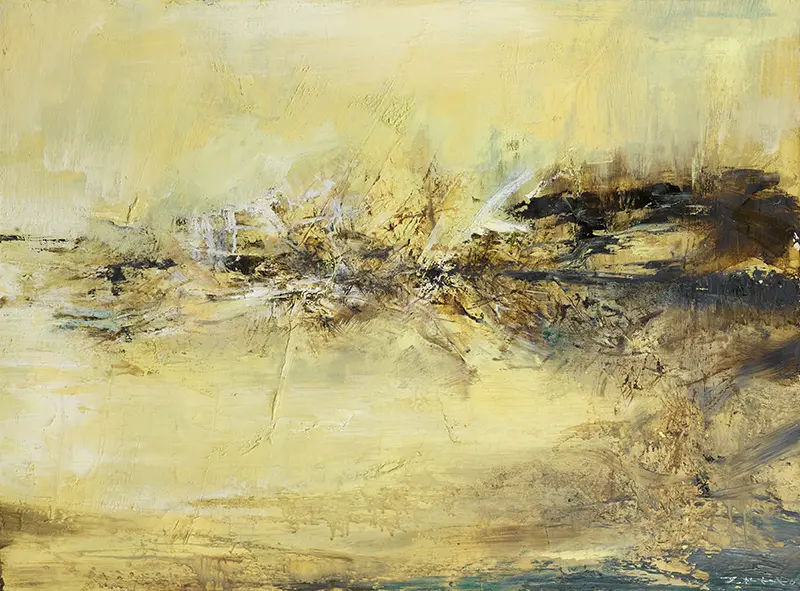
Works of Zao Wou-Ki
Zeng Fanzhi is, in many ways, a representative figure of his era. He possesses strong technical foundations and an exceptional capacity for artistic production. What distinguishes him is his acute sensitivity to the atmosphere of contemporary society, history, and culture. He understands how images function within the conditions of the present moment.
When art becomes connected to larger social and political structures, this is not unusual. Throughout history, art has often served broader historical purposes. Zeng Fanzhi has demonstrated an extraordinary ability to position his work within these currents. This is why I compare him to the director of a successful communications enterprise: he possesses remarkable sensitivity to his environment and an equally remarkable ability to project his artistic presence into the wider world.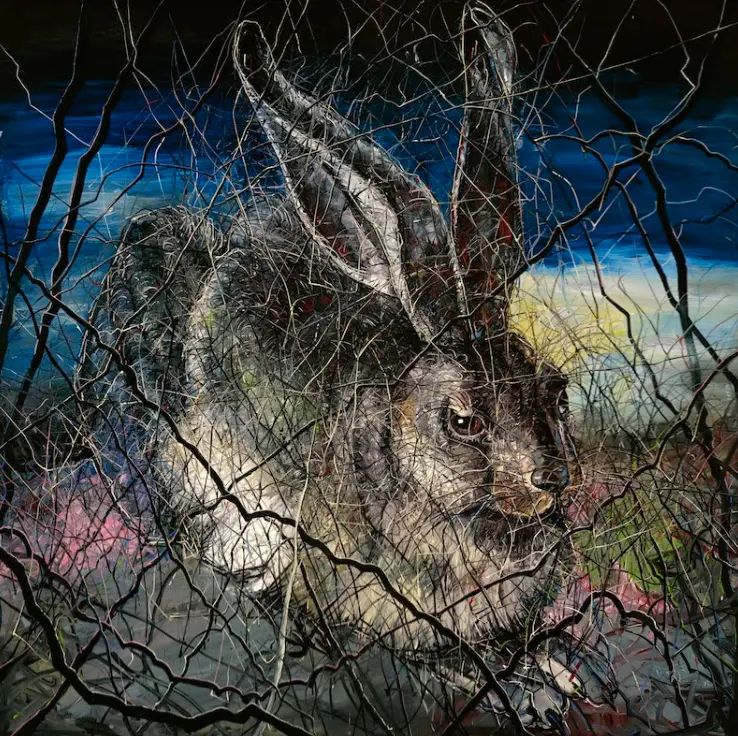
Works of Zeng Fanzhi
To me, Zao Wou-Ki resembles an elegant overseas Chinese scholar whose work carries both Chinese cultural memory and international experience. Zeng Fanzhi represents a distinctly contemporary figure whose artistic language is shaped by modern conditions and global visibility.
I, however, remain closer to the farmer. I continue cultivating the field inherited from my cultural roots, introducing new variations and new ideas while remaining connected to the soil itself. My hope is that this landscape, passed down through generations, may continue to be seen, understood, and renewed in the present age.
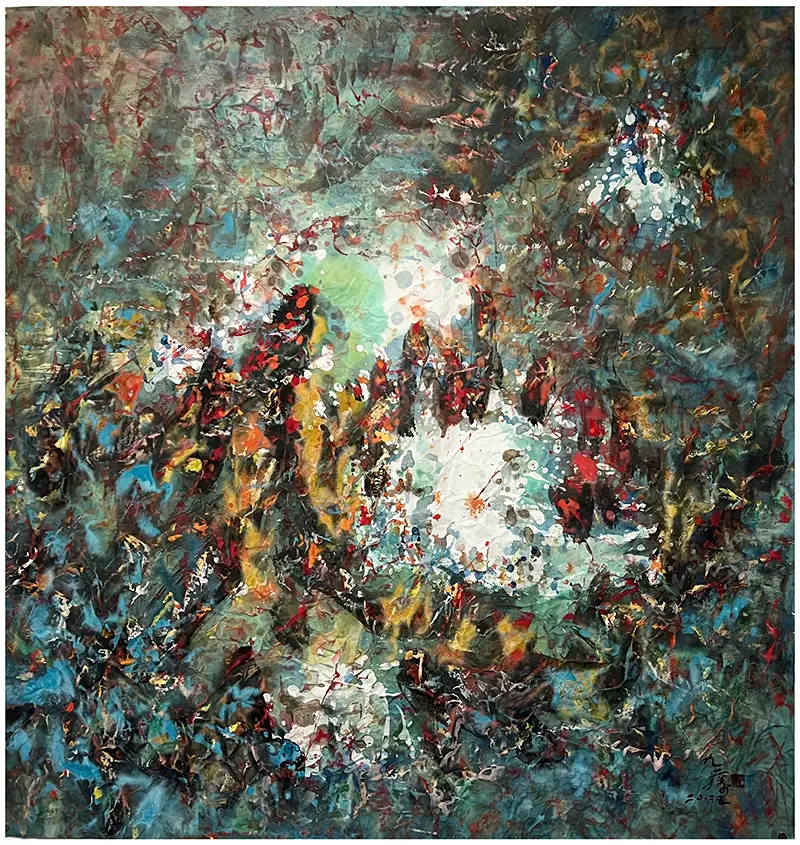
Recent Works of Senxiangism
Anyone who has carefully viewed works of Senxiangism can readily recognize the differences between them and the works of Zao Wou-Ki or Zeng Fanzhi. If one cannot perceive these distinctions, there is little value in argument.
In reality, artistic classification exists primarily for the purposes of study and discussion. Categories help us understand history, but they should not become prisons. Too often, people remember the category and forget the artwork itself.
True art remains an act of exploration. What belongs to the past has already entered history, yet mutual influence among artists is inevitable. Every generation builds upon the foundations laid by those who came before. Some contributions are large; some are small. Art history itself is formed through the accumulation of countless such contributions.
For this reason, someone who truly understands art history would rarely say that a work has already been painted by someone else. Such judgments often arise from insufficient attention and insufficient observation.
A mature artist must absorb broadly. One must, as the old saying goes, “gather all strange peaks to make one's draft,” and then discover a point of personal breakthrough. Pushed far enough, that breakthrough becomes an individual artistic language.
As for technique, the differences among artists are often smaller than people imagine. What truly differs is sensitivity. Techniques are interconnected; only their manifestations vary.
It is like musical notes. The notes themselves may be the same, yet the compositions are different. The instruments are different. The people performing them are different. Thus entirely different worlds emerge from the same underlying elements.
The essence of art is to break deadlocks, continually question inherited assumptions, and remain open to renewal. This is where vitality resides. Labels and categories may be useful for orientation, but they are only temporary stopping places along a much longer journey.
For an artist, it is better to speak than to remain silent. Whether one's conclusions are complete or incomplete is less important than the willingness to think, question, and articulate. These reflections may not provide a final answer, but they are, perhaps, sufficient to answer this particular question.