I. Establishing the Bone: Constructing the “Framework” and “Spiritual Resonance” of Landscape
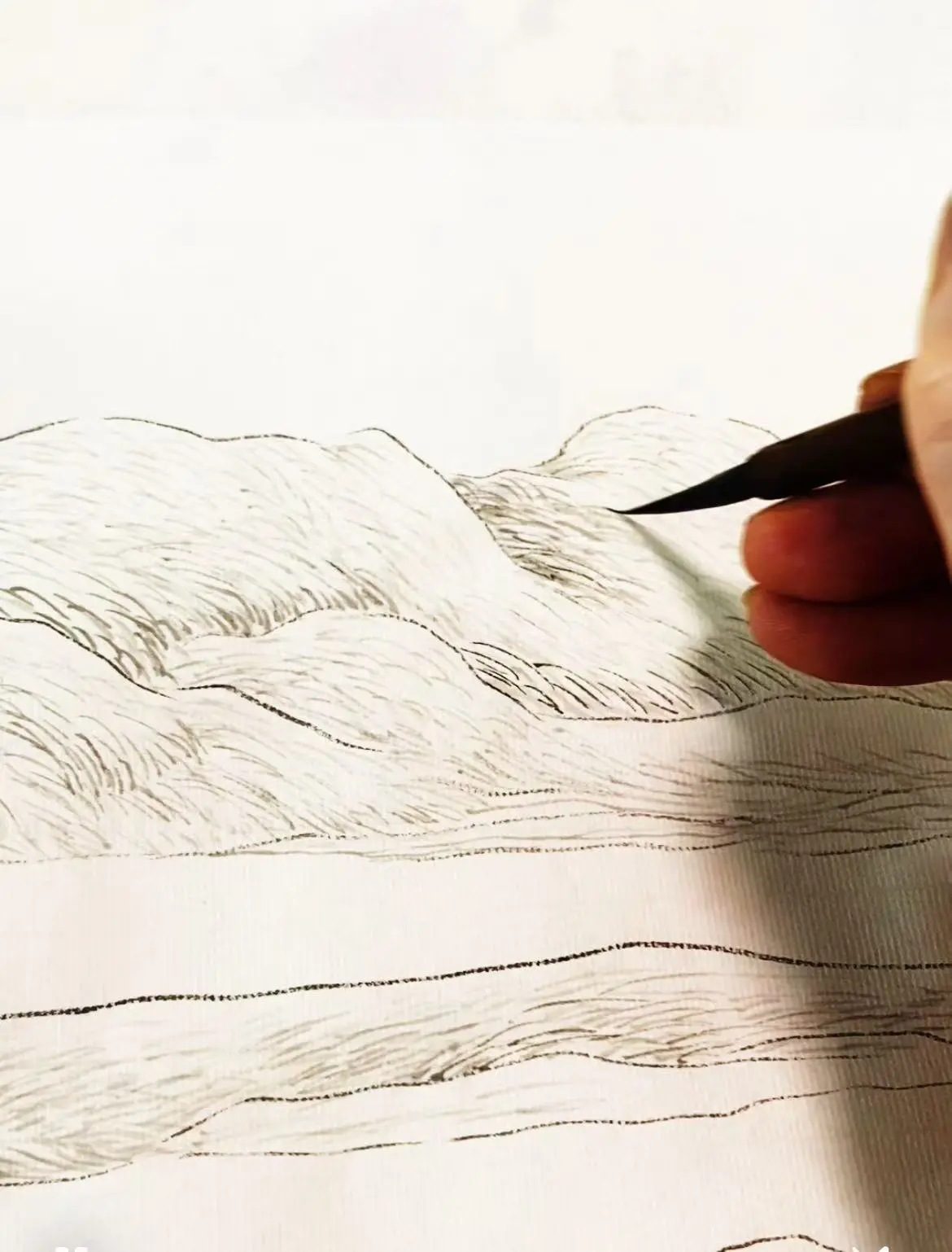
Line is the framework that supports the entire spiritual world of the painting.
Through variations in thickness and thinness, density and lightness, dryness and moisture, turning and pausing, outlining and defining, line directly creates the texture of objects and the sense of space. A good line must itself be "alive"—with breath, rhythm, and strength. Its vitality should seem to “grow” out of the object itself, sustained by a consistent inner steadiness, rather than being merely pieced together.
II. Describing Things: Revealing the “Texture” and “Grain” of All Things
The line of landscape painting has evolved into an extremely rich technical system:"cunfa", or texture strokes. This is the fullest embodiment of the mission of line. It goes beyond mere “contour” and penetrates into the grain, texture, and material quality of things.
III. Conveying Meaning: Transmitting the Painter’s “State of Mind” and “Artistic Realm”
Line is the direct externalization of the painter’s emotion; it is the flowing trace of the heart. The same landscape, in the hands of painters with different states of mind, will produce lines of entirely different emotional temperaments.
When the heart is open and joyful, the line may be smooth and rounded, like drifting clouds and flowing water.
When the heart is filled with grief, indignation, or solitary pride, the line may become dry, rough, and forceful, carrying a “metal-and-stone” quality, full of struggle and power.
When the heart is quiet and detached, the line may become simple, sparse, ethereal, and free.
The density and looseness, gathering and dispersing, emptiness and solidity of line together construct the artistic realm of the painting.
Dense texture strokes and rubbing can create a realm of profound richness and moist vitality.
A few spare outlines, on the other hand, can create an ethereal realm in which "white is treated as black", and emptiness becomes presence.
IV. Commanding Momentum: Organizing the “Rhythm” and “Vital Force” of the Image
Landscape painting emphasizes the careful orchestration of position and space. Line is the director that organizes the movement and momentum of the whole image. The direction of line and the movement of the brush guide the viewer’s gaze.
The length and brevity, curvature and straightness, continuity and interruption of line function like musical notes, forming the rhythm of the picture.
In short, the mission of line in Chinese landscape painting begins with "form-making" and ultimately returns to "writing the heart". It is both the "law" by which all things are shaped and the "poem" through which the spirit is expressed. With the purest and most abstract visual language, it carries the richest and deepest cultural spirit.
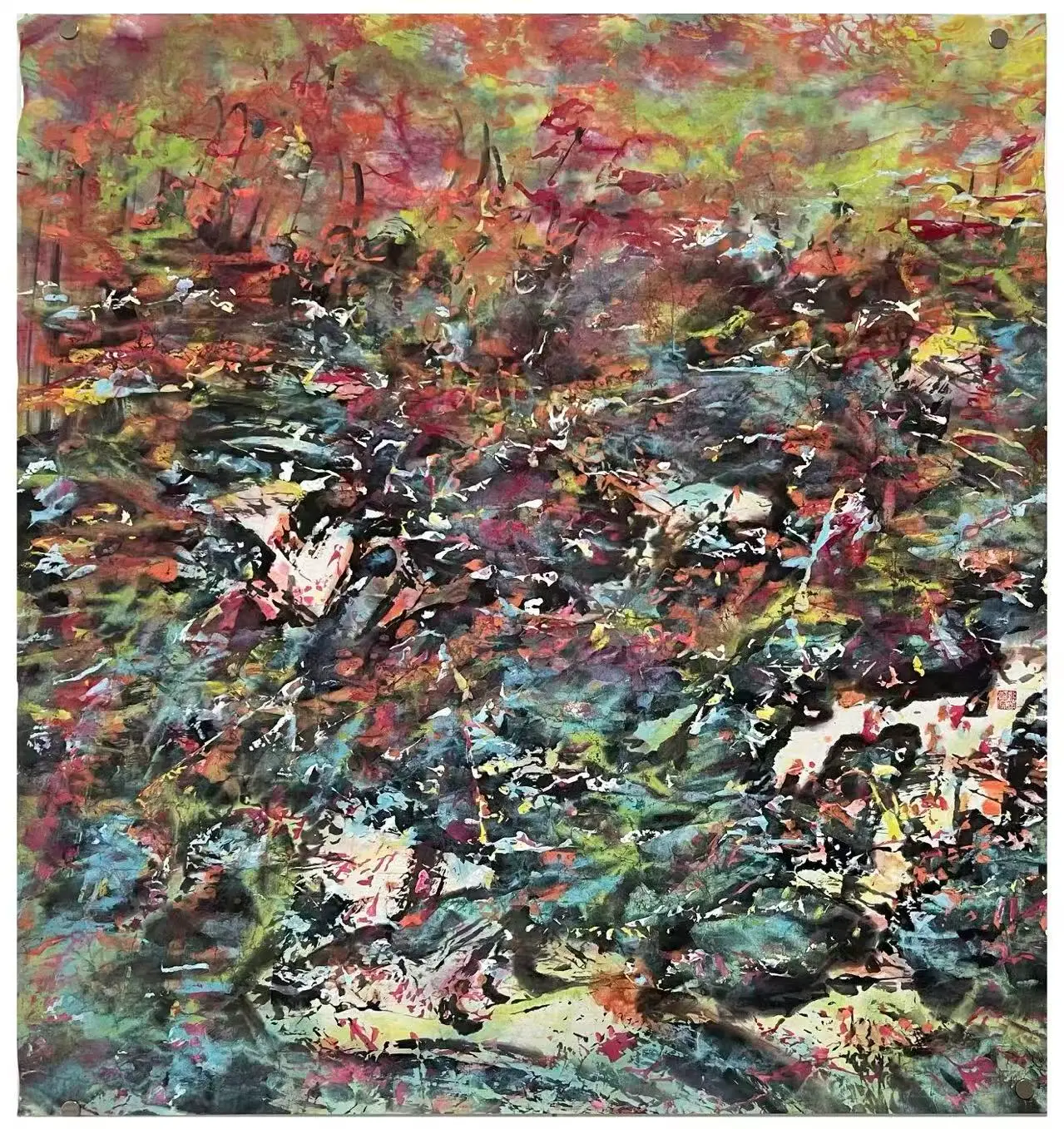
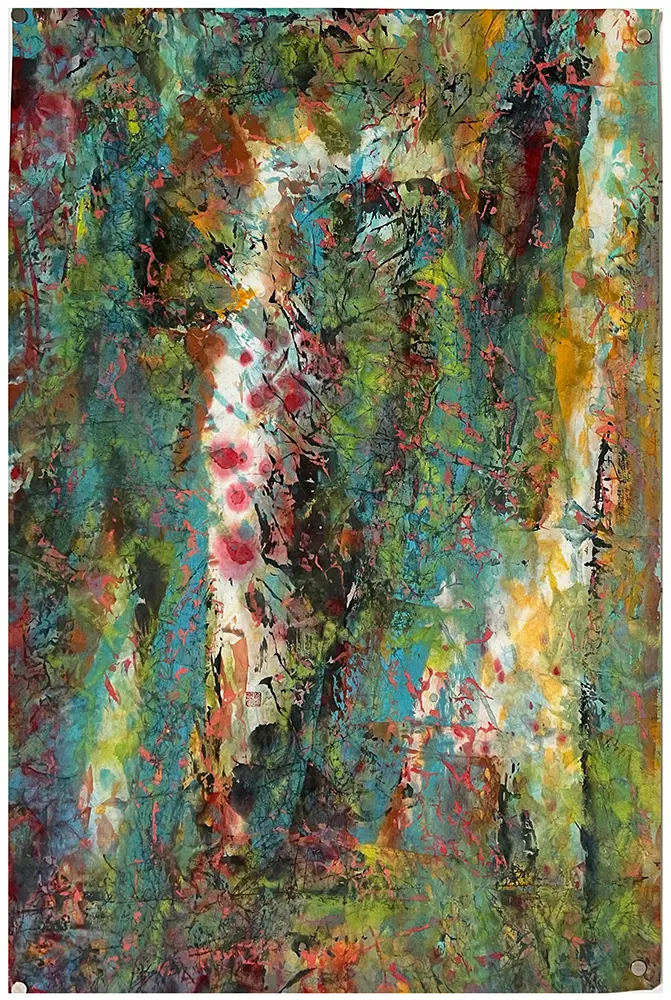
The ink draft and underlying structure of a "Senxiangism flow-state work" are built upon this very foundation, from which a uniquely self-generating visual feast of manifestation comes into being.
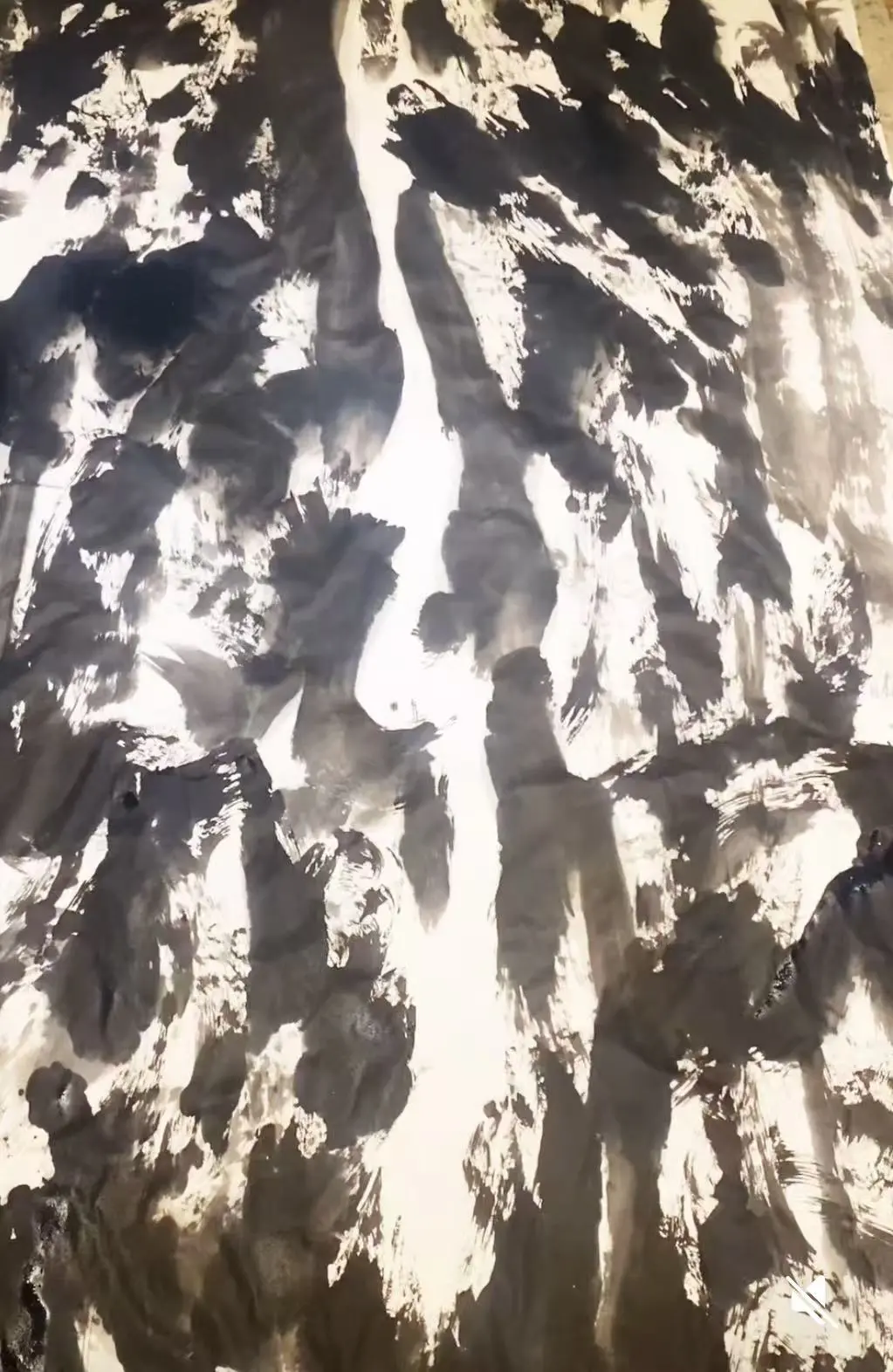
In "Senxiangism flow-state works", the ink-draft lines are at times partially concealed, as later stages of crumpling, heavy color, and even reconfiguration overlay and transform the original
brushwork. Yet, as I understand it, the wonder of Chinese painting on raw xuan paper lies precisely here: even when the visible traces of the underdrawing no longer appear on the surface, their accumulated solidity still remains. Their depth is not lost. It continues to exist with its own rhythm of life. The "Senxiangism flow-state" method of creation is, in essence, an elevation of the "scripturality" of Chinese painting—from the “writing of line” to the "writing of the entire creative process". Traditional writing records the instantaneous movement of the brush tip across paper. The “process-writing” of Senxiangism records the complete epic of one’s thoughts, emotions, and even time itself, as they are deposited, collided, and fused again and again upon raw xuan paper in the living present. The hidden ink draft is the opening chapter of that epic. It may also be understood as the deepest and most contemporary interpretation of “bone-method brushwork.” “Bone” need not always reveal itself through visible lines. It may instead become an invisible yet perceptible inner structural force, diffused throughout every particle of the work.
The "flow-state of Senxiangism" may be seen as an ultimate contemporary evolution of the spirit of Chinese landscape painting. It preserves the most essential philosophical core of the tradition—**the interpenetration of mind and matter, and the living resonance of qi**—yet brings it into outward form through my own most contemporary and deeply personal means, even, one might say, through methods akin to "performance" and "process art". I am not painting landscape;"I am landscape itself". I am not creating; I am allowing "Senxiang" to reveal itself naturally through me as a conduit.
What is reached here is the realm of “following the heart’s desire without overstepping the bounds.” This is not merely the summit of an individual artistic practice; rather, it offers an exhilarating model for thinking about the future possibilities of Chinese painting.